















Nurudeen Lukman
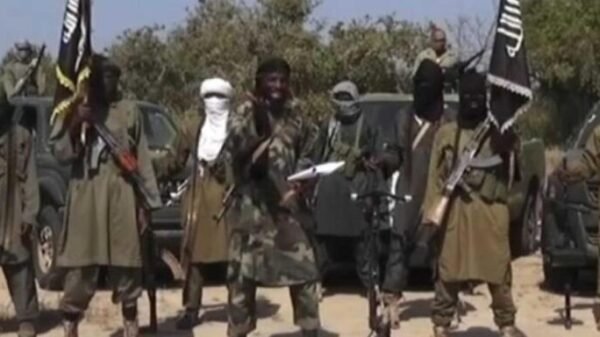
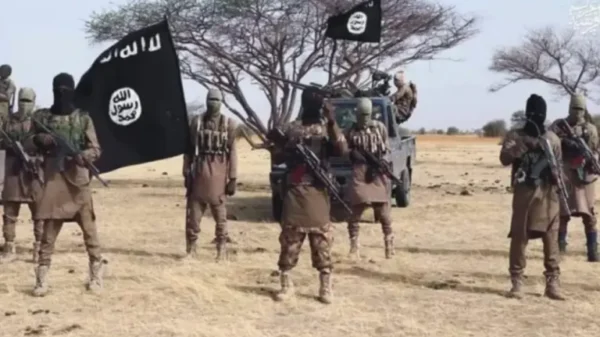
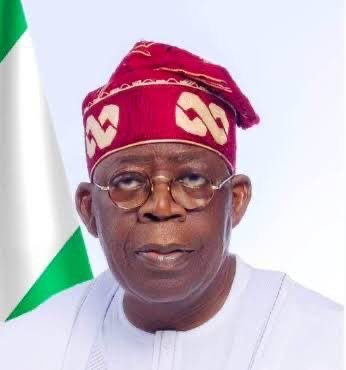
Bola Ahmed Tinubu had his job well cut out from day one. The despair and forlorn lethargy into which the country had sunk under his immediate predecessor, the pastoralist, Muhammadu Buhari, left little or no choice. The economy was on its knees as insecurity walked the length of the country on all legs. Apart from a glaring inability to confront Boko Haram insurgency in the northeast, the deadly group was making inroads into other parts of the North. Rampaging gunmen operating as bandits or kidnappers were also dispensing death, blood, sorrow, and fear in all regions of the country. “ESN,” the criminal arm of a secessionist group, the outlawed Indigenous Peoples of Biafra, (IPOB), took the breath away in the Southeast.
Little wonder security of lives and properties was an urgent task, in fact, a priority for the new president. In his 80-page manifesto, Tinubu then candidate of the All Progressives Congress, *APC), did not only vow to crush insecurity, he also promised food security. How time flies. Tinubu has already expended one year out of his four-year mandate, and it is time to pitch his performance against his promises. Outside his famed political wizardry as reflected in his ability to run a much more inclusive government than his predecessor’s, Tinubu has demonstrated tact and commendable will in the fight against insecurity. Yes, there are still glaring challenges in many states. However, the overall spectacle is that of a safer Nigeria, than what we had about this time last year.

A major success story is the speed at which victims of abduction regain their freedom. For instance, recently when more than 30 students of the Confluence University of Science and Technology, (CUSTECH), Osara, Kogi State were abducted from their classrooms on 9th May, the government was prompt, sparing no effort to facilitate their rescue. Sadly two of the students were killed by the hoodlums before they were fully recovered. All others were successfully rescued by a combined force of policemen, vigilantes, hunters, DSS operatives and the military. The last set of 8 students were rescued in a vast jungle in Kwara State and handed over by the Chief of Defence Staff, (CDS) Gen. Christopher Musa, to the Kogi State governor, Usman Ododo in Abuja on Monday, 3 June. Needless to say that an unknown number of the criminals paid with their lives, while many were also apprehended. Those arrested are helping the police with their investigations.
On Monday, 15 April, 2024, the National Security Adviser, NSA, Mallam Nuhu Ribadu had received a similar set of rescued victims in his office. The 22 were the last batch of those abducted from the Federal University, Gusau, (FUG), Zamfara State in September 2023. They sniffed freedom after more than 200 days in captivity. As a matter of fact, last month, there were unconfirmed reports that Leah Sharibu, the last of the 110 Dapchi school girls, abducted on Feb 19, 2018 may have finally been rescued. This will require cross-checking. More than 1,000 victims are said to have been rescued from kidnappers since Tinubu came on board. They were rescued without having to pay ransoms. “We have so far released over a thousand of such victims without noise and in complete respect for their privacy and safety. We released people from Zamfara, Sokoto, Kaduna, Katsina, Taraba, Adamawa, and so many other states. It is making a difference, it is a matter of time and we will see the outcome of the work we are doing.” These were the words of an excited Ribadu at the event.
The Tinubu presidency has markedly decimated Boko Haram and its twin satanic outfit, Islamic State West Africa Province, (ISWAP), to a defending outfit. According to reports more than 70 per cent of the group’s operations are now defensive. The rate of bombings have been curtailed. Reports indicate that terrorist attacks have generally reduced to about 10 per cent of what it was about a year ago. Hundreds of families displaced from their communities have returned home in the Northeast to resume their farming and other economic activities. In addition, out of a total of 394 attacks on Nigeria by non-state actors in 2023, only 64, representing far less than 20 per cent, occurred under the Tinubu regime.
Today, farmers feel safer on their farms than they were in the corresponding period last year. This is very important for national food availability, security and availability. The United Nations, (UN), recently released a document raising the alarm that Nigeria is one out of 18 countries labelled “hunger hotspots” across the world. Nigeria is suddenly featuring in the same bracket with distressed nations like Burkina Faso, Haiti, Mali, Sierra Leone, South Sudan, Ethiopia, Somalia, Malawi, Myanmar, Lebanon, Mozambique, and so on. This explains Tinubu’s desire for Nigerians to grow enough to feed themselves primarily, before considering exportation. Criminal herders bearing AK-47 rifles and other lethal weapons no longer brazenly trample crops and randomly chase defenseless farmers from their land.
People also have better travelling experiences on the roads with their lives less exposed to danger. Commuters are more confident these days travelling through the night which used to be a favourite option for many traders in parts of the country. The drastic security improvements are attributed to the use of both kinetic and non-kinetic measures by the administration. In January, the president approved a whopping N50 billion to a non-kinetic initiative, *Pulaaku,* which loosely means ‘to be shy’ in Fulani. It aims to enhance living conditions and livelihoods in selected states, starting with Sokoto, Kebbi, Katsina, Benue, Zamfara, Niger and Kaduna. Embedded in it are the construction of residences, roads, schools and other essential facilities to catalyse the general standard of living in the region.
Tinubu, a trained auditor, who has a reputation for good headhunting may have brought his experience to bear in his choice of security chiefs and the other drivers of the sector. The President read the riot act to them and also seems to be leading the battle from the front. Security Council meetings are no longer reserved as a response to a major breach. They hold regularly. Service chiefs can also be summoned spontaneously in response to security dynamics across the country. The fight against insecurity is now intelligence-based and supported by technology. The administration continues to boost its military armoury with the latest fighting hardware and ever retraining its personnel across services. Not long ago for instance, the Defence Headquarters, (DHQ), took delivery of at least 20 newly acquired armoured personnel carriers, (APCs), from the federal government. Similarly, in February, the president inducted two new *T-129 ATAK helicopters* and a *King Air 360ER Beechcraft* into the Nigerian Air Force, NAF’s (NAF) Order of Battle, (ORBAT).
The overall impact of these ongoing investments is a safer and more cohesive nation. In one year, the Tinubu administration has indeed made impressive gains in the intelligence and security sectors. The Office of the National Security Adviser, (ONSA), affirms reductions in hitherto regular security scares by self-styled secessionist entities across the country. Tinubu recently noted that: “Since our administration took over the mantle of office, security has improved. Silently, we have worked to free captives from abductors. While we can’t beat our chest yet that we had solved all the security problems, we are working hard to ensure that we all have peace of mind in our homes, places of work and on the roads.” One can not but agree with him. The nation’s capital which witnessed several infractions up until early this year, has recovered substantially.
Incidents of kidnapping, “one-chance” robberies and the like are becoming far-fetched. There is a semblance of the nighttime illuminated of the federal capital in places which may impact security. A lot more, however, needs to be done across the ever-expanding nation’s headquarters. Nigerians of the masculine gender resident in Abuja can now once again move freely about without fears of sudden organ disappearance! It is not over until it is completely over though. The administration needs to work harder especially in states like Plateau, Benue, Niger, Zamfara and Katsina, to restore order and public confidence in the capacity of government to protect its own.
*Lukman, a postgraduate student of international relations, lives in Abuja.*