






















The recent announcement by a group styling itself as “Yagba Advocacy” to recognize the Kogi State Commissioner for Finance, Budget and Planning, Mukadam Idris Asiru, as the “most outstanding performing public office holder in Yagba land under the Kogi State Government” raises serious questions about credibility, fairness, and timing.
While no one disputes that the Commissioner may have supported some philanthropic gestures within Yagba East, it is important to clearly separate private benevolence from measurable public sector performance. Public offices are assessed primarily on policy impact, institutional reforms, and development outcomes, not merely on personal or charitable distributions.
Many of the items cited in the so-called fact sheet—motorcycles, refrigerators, sewing machines, personal stipends, and cash gifts—are acts of philanthropy, not indicators of outstanding governance within the Finance, Budget and Planning Ministry. The Ministry’s core mandate includes fiscal discipline, budget transparency, revenue optimization, and strategic economic planning for the entire state. Unfortunately, the statement by Yagba Advocacy fails to present any verifiable achievement within those statutory responsibilities.
This is why many observers within Yagba land find the honour ill-timed and undeserving, particularly when several other Yagba sons and daughters serving in government have demonstrated far more visible and policy-driven leadership in their respective ministries.
For instance, the transformative efforts of the Commissioner for Education, Wemi Jones, remain widely acknowledged across the state. Under his leadership, the education sector has witnessed notable reforms in school infrastructure, teacher development, and policy direction. These initiatives have produced tangible institutional impact affecting thousands of students and educators across Kogi State.
Similarly, the environmental reforms championed by the Commissioner for Environment, Joseph Oluwasegun, have significantly strengthened sanitation campaigns, environmental regulation, and public awareness programs. These efforts have had clear public health and environmental benefits visible across communities.
In comparison, the attempt to elevate personal philanthropy above institutional leadership risks cheapening the essence of public recognition. When awards are perceived as transactional or politically motivated, they lose their moral authority and begin to look like honours for sale rather than honours earned.
Yagba people deserve credible platforms that celebrate genuine service, transparent leadership, and measurable achievements. Recognition must be based on objective standards, not on selective narratives or publicity campaigns.
If Yagba Advocacy truly intends to promote excellence in public service, then its processes must be transparent, inclusive, and grounded in verifiable performance metrics.
Until then, this latest proclamation appears less like a celebration of merit and more like an attempt to manufacture honour where genuine public consensus is still absent.
Signed:
Segun Bolanle
Concerned Stakeholders of Yagba Land.



You May Also Like


News
Kogi State Commissioner for Information and Communications, Kingsley Femi Fanwo has charged the Information Officers to be diligent, effective, efficient, strategic and meticulous in...


Crime
The Edo State Police Command on Wednesday said Arthur Angel Jr., the 17-year-old son of the 70-year-old deceased human rights activist, Arthur Judah Angel,...


Crime
The Kogi State Police Command has announced the rescue of five persons from kidnappers. Spokesperson of the command, SP William Ovye Aya, in a...
Health
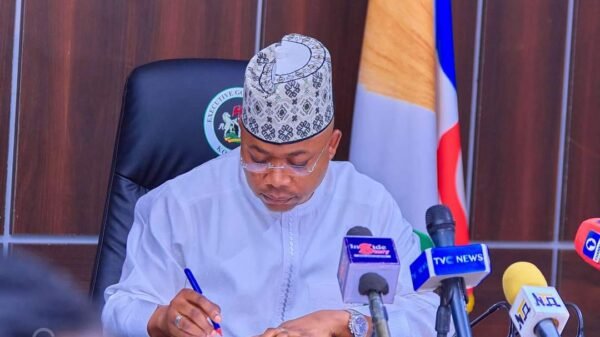
The governor of Kogi State Alhaji Ahmed Usman Ododo has signed a bill converting the state-of-the-art Reference Hospital, Okene, into the Confluence University of...


News
The Okun Development Association (ODA) has reaffirmed its commitment to advancing the development and empowerment of Okun women, as the world celebrates International Women’s...


Politics
Kogi State Governorship Election Petition Tribunal sitting in Abuja has affirmed election of Usman Ododo of the All Progressives Congress (APC) as the...