













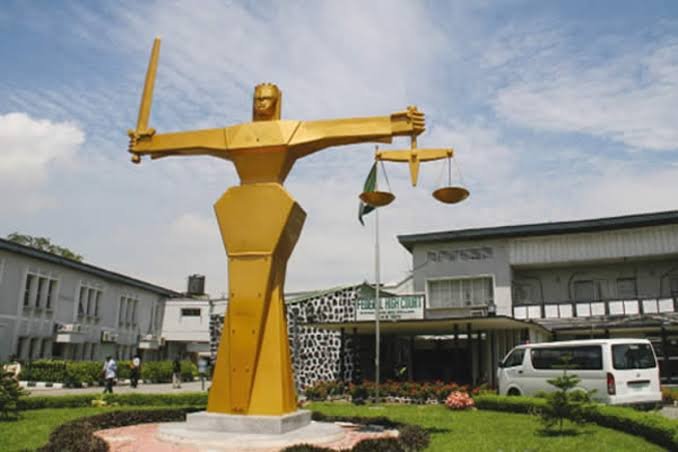
Following the suit filed by the 19 state governments contesting the constitutionality of the laws that established the Economic and Financial Crimes Commission, EFCC in the country, the Supreme Court is set to rule on their request today.
The governors and the EFCC are eagerly awaiting the judgment of the apex court, which would confirm the legality or otherwise of the anti-graft commission.

The state governments, in their suit, had argued that the Supreme Court, in Dr Joseph Nwobike Vs Federal Republic of Nigeria, held that it was a United Nations Convention against corruption that was reduced into the EFCC Establishment Act and that in enacting the law in 2004, the provision of Section 12 of the 1999 Constitution, as amended, was not followed.
They argued that in bringing a convention into Nigerian law, the provision of Section 12 must be complied with.
According to the plaintiffs, the provision of the Constitution necessitated the majority of the states’ houses of assembly agreeing to bring the convention in before passing the EFCC Act and others, which was allegedly never done.
The argument of the states in their present suit, which had reportedly been corroborated by the Supreme Court in the previous case mentioned, is that the law, as enacted, could not be applied to states that never approved of it, in accordance with the provisions of the Nigerian constitution.
Hence, they argued that any institution so formed should be regarded as an illegal institution.
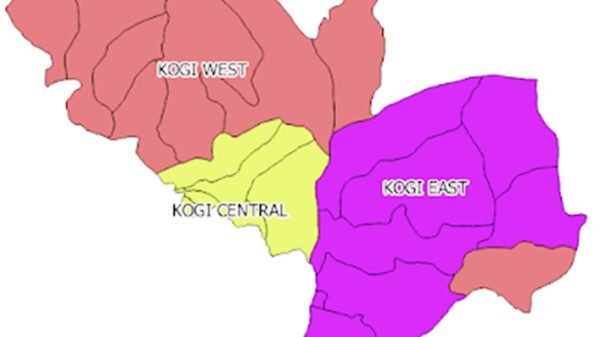
The suit was initiated by the Kogi State government and joined by the Ondo, Edo, Oyo, Ogun, Nasarawa, Kebbi, Katsina, Sokoto, Jigawa, Enugu, Benue, Anambra, Plateau, Cross-River and Niger.
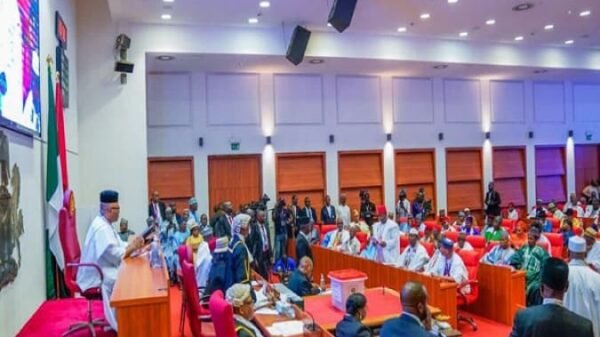
A seven-member panel of justices, led by Justice Uwani Abba-Aji, on Tuesday, fixed October 22 for a hearing.
The EFCC, however, expressed dismay over the call for the overhaul of their institution, stating that those pushing for such are “feeling the heat of its work.”
The EFCC’s Director of Public Affairs, Wilson Uwujaren, disclosed this in an interview on Channels Television’s The Morning Brief programme on Monday.
Uwujaren defended the significance of the commission, stating that Nigerians needed to fight against corruption.
“We are shocked by what is happening. Nigerians should see through this shenanigan and oppose it because I don’t see how this country can survive without the EFCC, given the kind of corruption problem that we have. Nigeria can not do without the EFCC.
“I am worried that, with the kind of problem we have with corruption in this country, some people would go to court to challenge the legality of the EFCC.
“For citizens in their states, I am not sure that the EFCC is their greatest problem. I doubt that this is the case. What you see playing out is simply people who are feeling the heat of the work of the EFCC and who want to derail what is going on within the EFCC.
“They see the EFCC as a threat, which is what is playing out. I think Nigerians can see through the gimmick of those who are behind the challenge to the legality of the commission,” Uwujaren said.
The EFCC official noted that those behind the call for the overhaul were determined to “derail” the commission’s anti-corruption fight.
“So, people who are concerned about transparency and accountability will wish for the EFCC to be ‘killed’. Let me use the word ‘killed’ because that is the agenda.
“They simply want to derail the fight against corruption because they don’t want accountability in their domains,” he said.
Meanwhile, lawyers and Senior Advocates, Dr Olisa Agbakoba and Femi Falana, have expressed divergent views on the constitutionality of the EFCC.
Agbakoba, a former President of the Nigerian Bar Association, wrote to the National Assembly about constitutional issues related to law enforcement agencies in Nigeria and factors inhibiting the government’s objective of abolishing corruption, as stated in Section 13 of the Constitution.
“They are legal institutions, and I see nothing unconstitutional about the anti-corruption agencies,” he said.
Speaking further, he noted that the EFCC had been doing its fair share in the fight against corruption, even though there was room for improvement.
“They have been able to fight corruption. You can’t imagine where we are coming from and where we are today. Corruption is one of the biggest challenges in this country, and whether we like it or not, these agencies have contributed their quotas.
“Of course, there’s room for more to do better, but within the limited resources and manpower, I think they’ve done fairly well,” he added.
The Deputy Director of the Socio-Economic Rights and Accountability Project, Kolawole Oluwadare, stressed that the functionality and constitutionality of EFCC were not in doubt.
He said, “The constitutionality of the EFCC is not in doubt. The functionality of EFCC as an anti-corruption agency is also not in doubt.
“If the legal argument was made four years ago on the constitutionality of EFCC, the question that Nigerians who are interested in the transparent and economic growth of Nigeria on the state governors suit is to ask what is the end game and what are they afraid of?”
The Executive Director of the Civil Society Legislative Advocacy Centre, Auwal Rafsjani, condemned the state governments’ action, stating that the suit threatened not only the fight against corruption but also the autonomy of local governments—a fundamental pillar of grassroots democracy.
He said, “The recent legal battles waged by these governors represent a blatant disregard for the rule of law and an attempt to undermine Nigeria’s progress in establishing institutions that hold public officials accountable.
“This calls for deep concern and unequivocal condemnation of the recent actions of some state governors targeted at EFCC, Nigerian Financial Intelligence Unit and by implications other anti-corruption agencies in the country, such as the Independent Corrupt Practices and Other Related Offences Commission, the Code of Conduct Bureau and key law enforcement agencies like the Nigeria Police Force; preparatory to the commencement of full implementation of the recent Supreme Court judgment with regards to local government autonomy in Nigeria.”
Credit: The PUNCH